
South India, Treasured Encounters
On Solo Travel Adventure
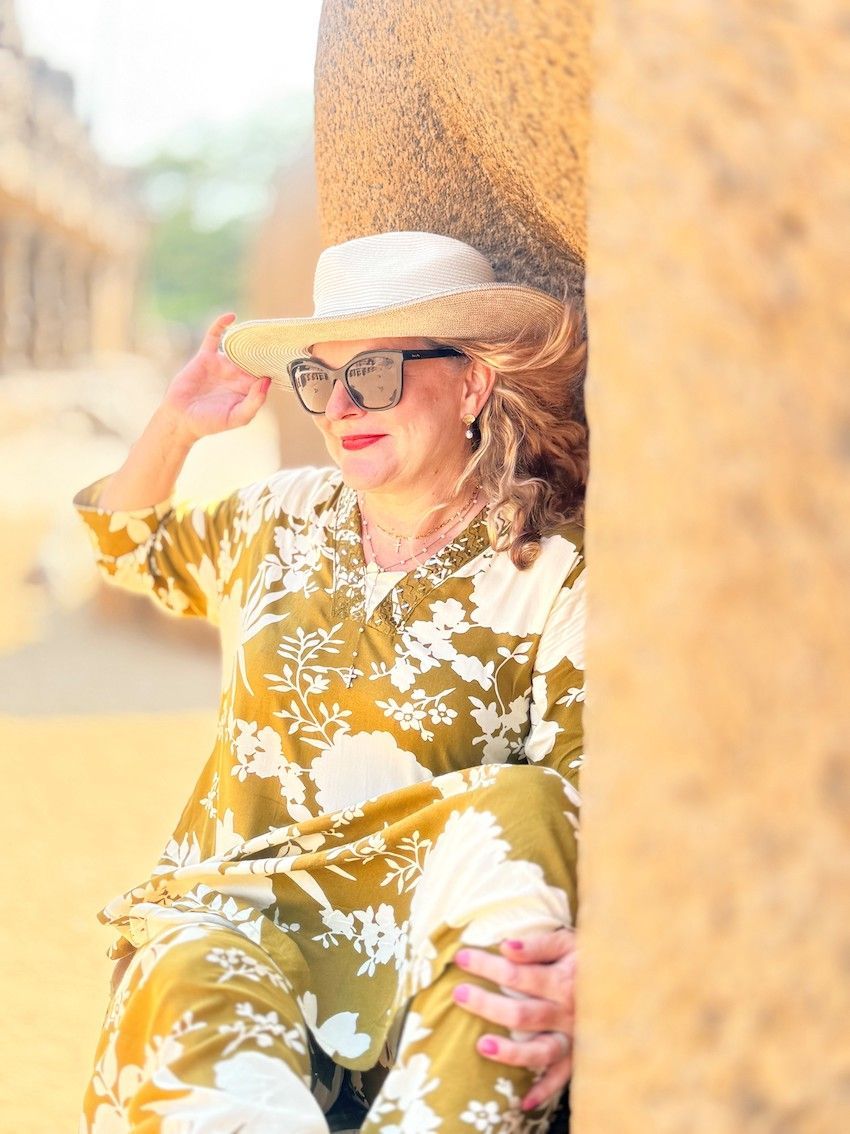
Travel writer, Kate Morfoot journeyed through southern India where she discovered far more than expected on
her incredible adventure in Kerala and Tamil Nadu.
Wild elephants moving quietly through forest edges, mountainous tea plantations dissolving into mist, the tranquil backwaters of Kumarakom alive with birds and village life, and unexpected kindness from strangers met along the way. Every place revealed something extraordinary about India’s rhythm of life.
A decade earlier, I had travelled an incredible journey through the Golden Triangle, culminating in the luminous presence of the Taj Mahal. It was shared, seamless, unforgettable. Northern India was intense and unrelenting at times, its beauty inseparable from its chaos, its energy, its constant collision of extremes. Ten years on, India has changed and continues to evolve at remarkable speed. This time, everything was different about the India adventure. Instead of travelling as a couple, this time I was travelling solo. (Now we have four dogs and more commitments at home, so I got a free pass to go solo).
Instead of a professional travel agent and staying in five-star hotels, I planned my own itinerary with a mix of traditional homestays and luxe hotels. My destination this time was South India, the west coast and inland territory of Kerala and parts of Tamil Nadu on the east coast. A very different trip and a different destination to that of northern of India. Known as God's Own Country, Kerala is green and lush beyond expectation. A place where water seems to thread through everything, canals, coastlines, lakes and rice fields.
Stretching along a narrow 580-kilometre coastal strip, it packs within it over 40 rivers, a vast network of backwaters, and the dramatic ridgeline of the Western Ghats, one of the world's eight biodiversity hotspots. There is something almost unspoken about the way it holds itself together, sea, backwaters, and mountains existing in close, continuous conversation. Did you know? India is made up of 28 states, each with its own language, landscape, cuisine, and cultural identity? Travelling between them feels less like moving within one country and more like passing through many. And nowhere is that contrast more immediate than in Kerala.
It is also one of India's most socially progressive states — with a literacy rate above 96%, the highest in the country, and a life expectancy that rivals many wealthier nations. Yet what defines it is not statistics, but atmosphere: a gentler pace, a softness in how life unfolds, a feeling that nothing here needs to be forced. It was my first-ever solo journey taken, over five weeks. There was hesitation, of course. Many negative what ifs rattling around in my brain. What if I missed my tight flight connection, lost something essential, or simply hated it? But beneath that noise was something quieter. A curiosity, and a steady confidence that only comes once you are already in motion.
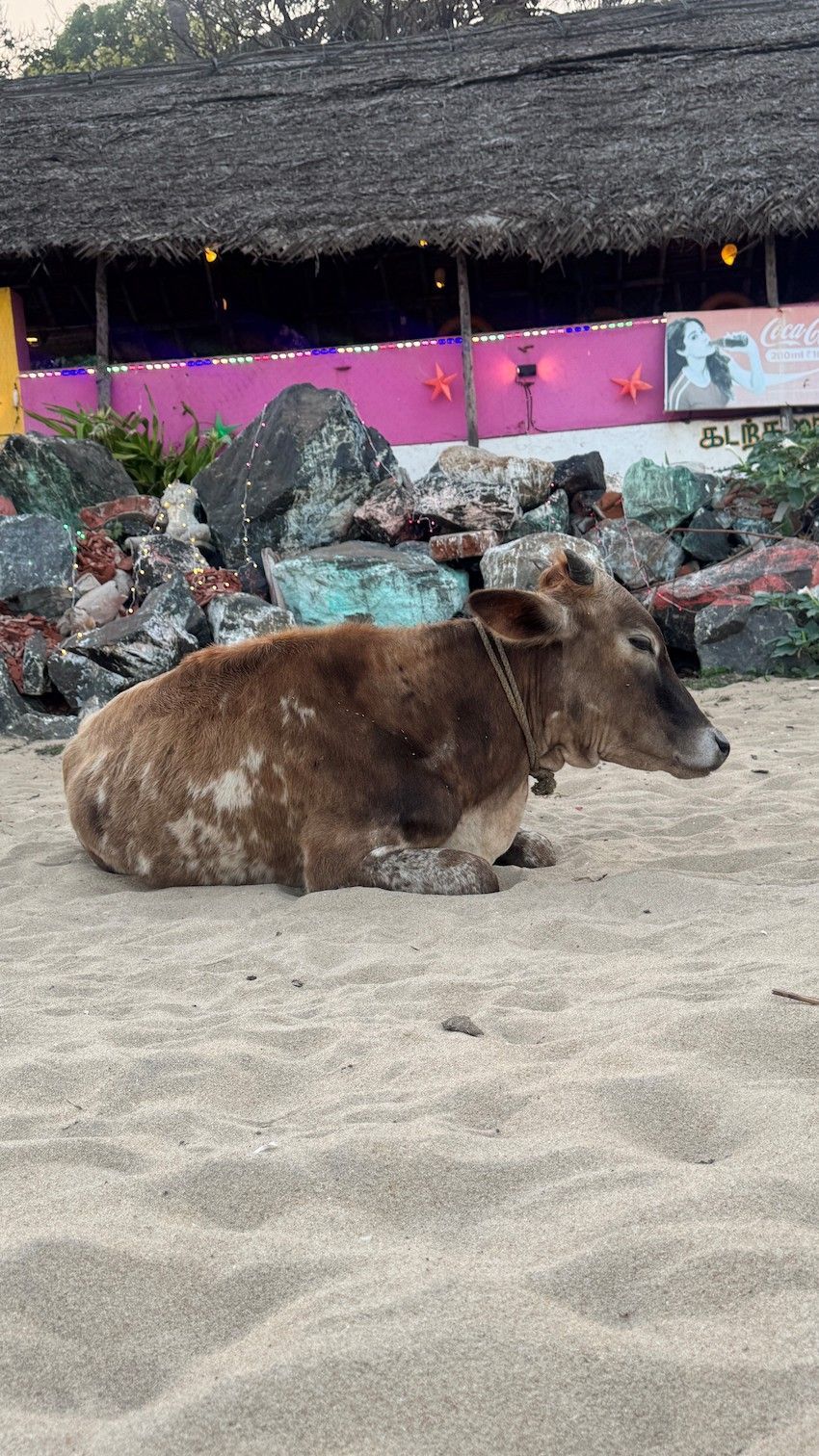

My journey began on the east coast, flying into Chennai where the hum of the city meets the edge of the Bay of Bengal. A place of temples, traffic, and salt-heavy air. India's sixth-largest city, Chennai is also the gateway to Tamil Nadu's ancient Dravidian civilisation, whose temple architecture dates back over two thousand years, predating many of Europe's great cathedrals. From there, I took an internal flight to Trivandrum, at the very tip of India. The real journey began as I explored the west coast of Kovalam, Varkala and the untouched, quietly beautiful Marari Beach.
In Kovalam and Marari, mornings belong to the sea. Fishing boats return before the heat builds, and the shoreline gathers itself gently into day. Even simple moments feel unhurried walking barefoot along the sand, watching nets being pulled in, sitting in small cafés as light shifts across the water. There is a scent here that stays with you, salt air layered with something softer; herbal oils, steam rising from Ayurvedic treatments, the quiet presence of wellness spaces tucked behind palm-lined lanes.
In Kerala, Ayurveda is not presented as luxury or escape. It is part of daily understanding. A philosophy of balance more than 3,000 years old, codified in ancient Sanskrit texts and still practised here with the same foundational principles, using over 600 medicinal plants native to the Western Ghats. Further north, Varkala rises sharply from the sea, cliffs cut cleanly against the Arabian horizon. Cafés and yoga spaces sit along the edge, but the real experience is the pause itself. People watch the ocean for long stretches without urgency, as if time has loosened its grip. At sunset, conversation naturally fades into silence.
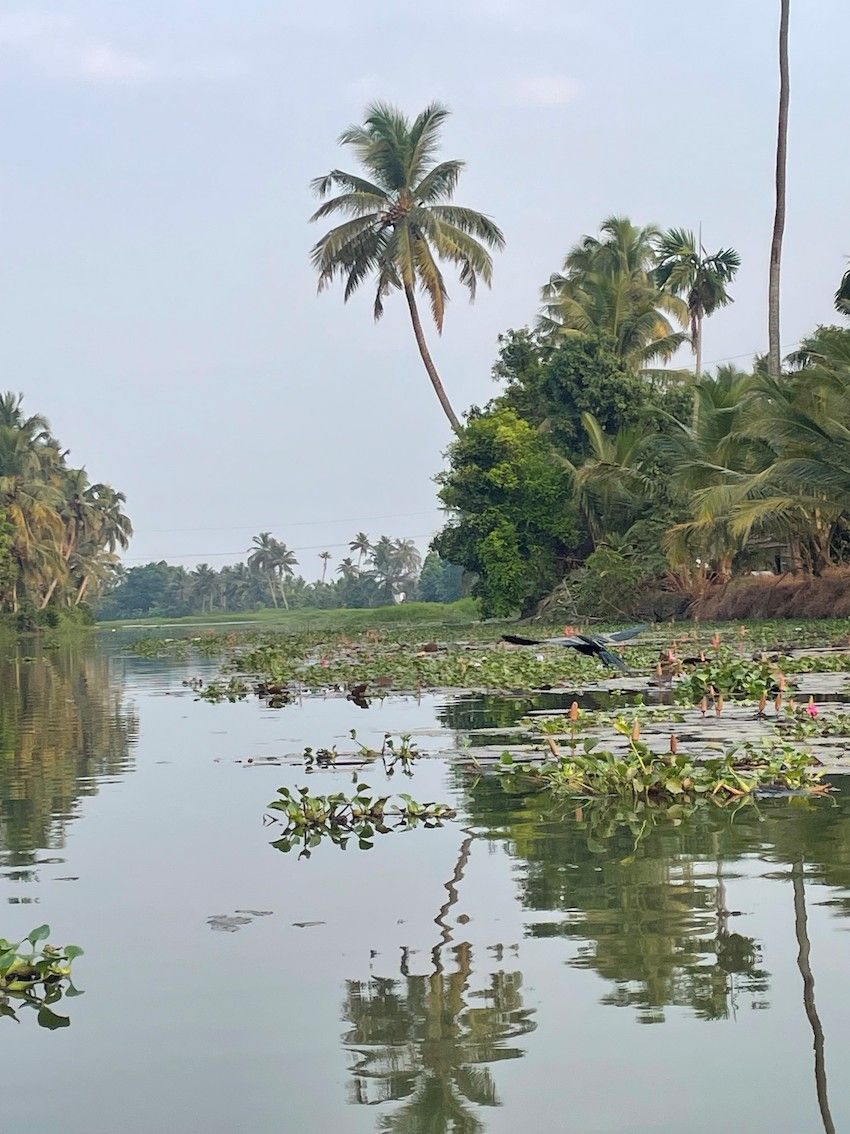
In Kumarakom, the backwaters widen into stillness. A houseboat moves through narrow canals where life unfolds at the water's edge. Laundry strung between coconut palms, fishermen moving with practiced ease, children waving from shaded steps. Kingfishers flash across the surface in sudden streaks of blue. Kerala's backwater network stretches for over 900 kilometres, and Kumarakom sits at the edge of Vembanad Lake, the longest lake in India, a vast, shallow expanse that sustains thousands of migratory birds each winter, including the rare Siberian crane.
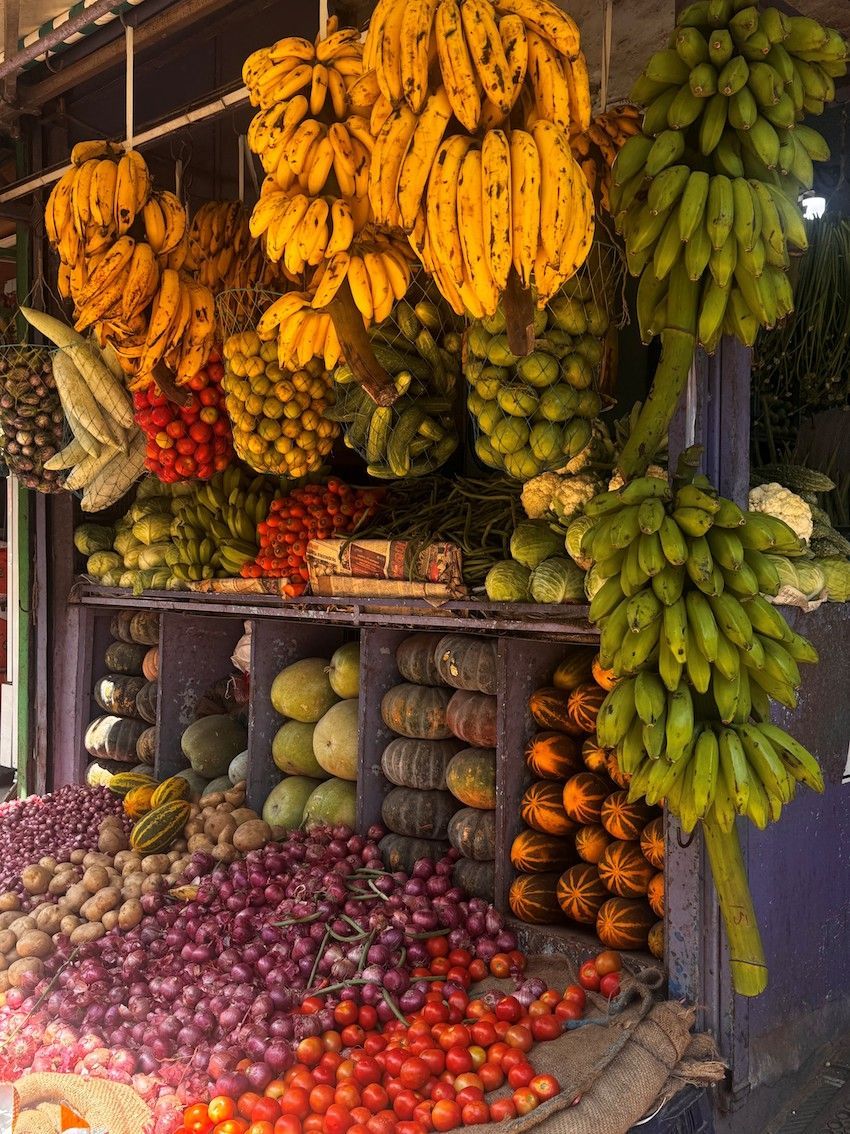
Time does not feel like it is passing here; it feels like it is softening. I stayed in a family home stay on the river, it was easy, peaceful and the home cooked fish masala was incredible. Sunrise boat trips to see the birdlife and sunset canoe trips were unforgettable in this lush and vibrant with bird life area. Inland, in Thekkady, the air thickened with spices. Cardamom, pepper, cinnamon all grown in dense plantation landscapes that once fed global trade routes. Kerala was, for centuries, the epicentre of the spice trade that drew Arab, Chinese, Portuguese, and Dutch merchants alike. Walking through the plantations, scent becomes memory. I wanted to do a 4x4 adventure into the Gavi forest. The scenery overlooking the mountains and teak canopy closing overhead was incredible.
We heard them before we saw them. Bells and then voices, low and rhythmic, rising through the trees. We followed the sound into a clearing and stopped. A group of forest families stood gathered around massive stones, ancient and mossy, arranged in the way that needs no explanation. This was their temple. No walls, no roof — just these great rocks and the forest around them, which seemed sufficient. A fire burned at the centre. The smoke went straight up in the still air.
They were deep in it chanting Om Namah Shivaya, the sound building and releasing in long waves. Bells kept ringing throughout, that particular tinkling that cuts through everything else. Nobody stopped when we appeared. After a moment, someone gestured. Come closer. We did.The puja continued around us. Jaggery was passed, crumbly, intensely sweet. Water was flicked from fingers over the group, and over us. The priest marked my forehead with a thumb, the same unhurried motion he'd used on everyone else. No fuss made of it.
Standing there among the stones, fire at the centre, bells going, voices rising — it was one of those moments that doesn't need embellishing. It was also my birthday. I hadn't mentioned it to anyone. But somewhere in a forest clearing in Kerala, with strangers singing to Shiva and a blessing still damp on my forehead, I was celebrated and blessed with new beginnings!
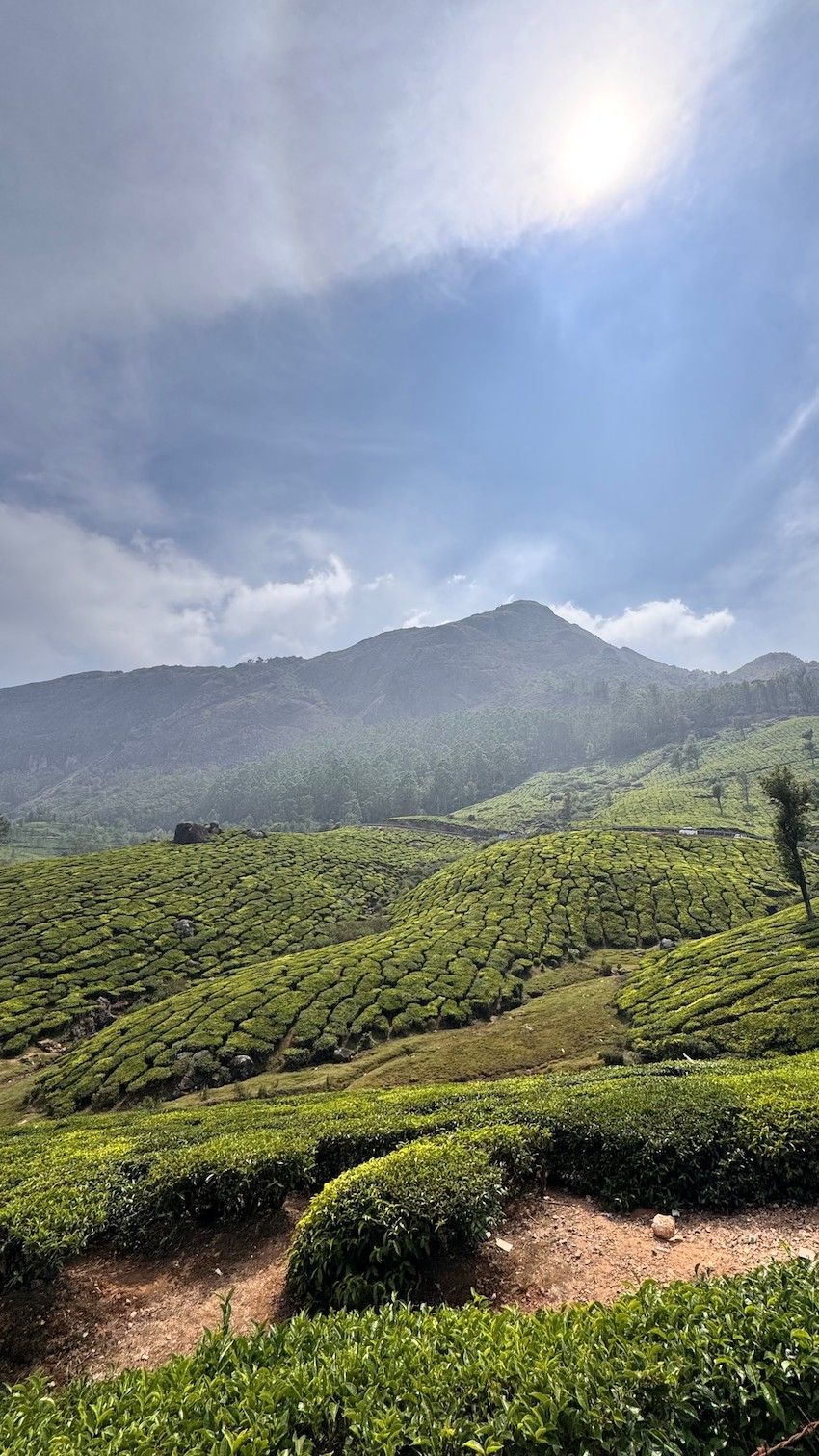
The climb into Munnar, around 1,500 metres above sea level, brings cooler air and a different kind of quiet. Endless tea plantations stretch across the rolling hills and deep valleys. Workers move slowly through the fields, small against the vastness of green. Tea plantation visits give a fascinating insight into the culture that has shaped this region for over a century. The British established Munnar's first tea estates in the 1880s, and today the area produces some of India's finest orthodox teas across roughly 30,000 hectares of cultivated hillside. Guided walks wind through orderly rows of Camellia sinensis bushes, their waist-high canopy trimmed flat by decades of careful hand-plucking. A knowledgeable guide will point out the prized young two-leaf-and-a-bud flush — the most tender growth, picked for the finest grades for White and Green Teas — and the older, coarser leaves left to sustain the plant. The air carries a clean, vegetal scent that sharpens after the morning mist lifts.
The factory visits are equally compelling. Inside corrugated iron buildings warmed by the afternoon sun, the full arc of tea production unfolds; leaves spread thin across withering racks, the rhythmic tumble of the rolling machines, the rich, fermented smell rising from the oxidation room. Workers sort, grade, and pack with a quiet efficiency born of long practice. Tasting sessions at the end draw out the nuance — a briskness, a malty depth, a long floral finish — in teas you might otherwise pour without a second thought.
Beyond the plantations, Munnar rewards slower exploration. The narrow roads curl past cardamom and eucalyptus groves, opening suddenly onto viewpoints where the hills fold away into the distance in a dozen shades of green. Eravikulam National Park, just outside town, shelters the endangered Nilgiri tahr — a stocky mountain goat found nowhere else on earth, its population having recovered from near-extinction to over 900 individuals largely thanks to protections established here. Early mornings, when mist pools in the valleys below and the upper slopes catch the first warmth of the sun, offer a stillness that feels genuinely hard-won after the chaos of the plains below.
In Fort Kochi, history sits in layers rather than sequence. Portuguese façades stand beside Dutch churches; colonial warehouses are now galleries and cafés. Vasco da Gama himself landed here in 1498, the first European to reach India by sea and the city that grew from that encounter has worn its mixed heritage lightly ever since. Along the shoreline, Chinese fishing nets rise and fall in a rhythm unchanged for centuries, introduced, it is said, by traders from the court of Kublai Khan. Incense drifts from unseen corners, church doors open into late afternoon light, and spirituality exists not as spectacle but as atmosphere, quietly woven into daily life.
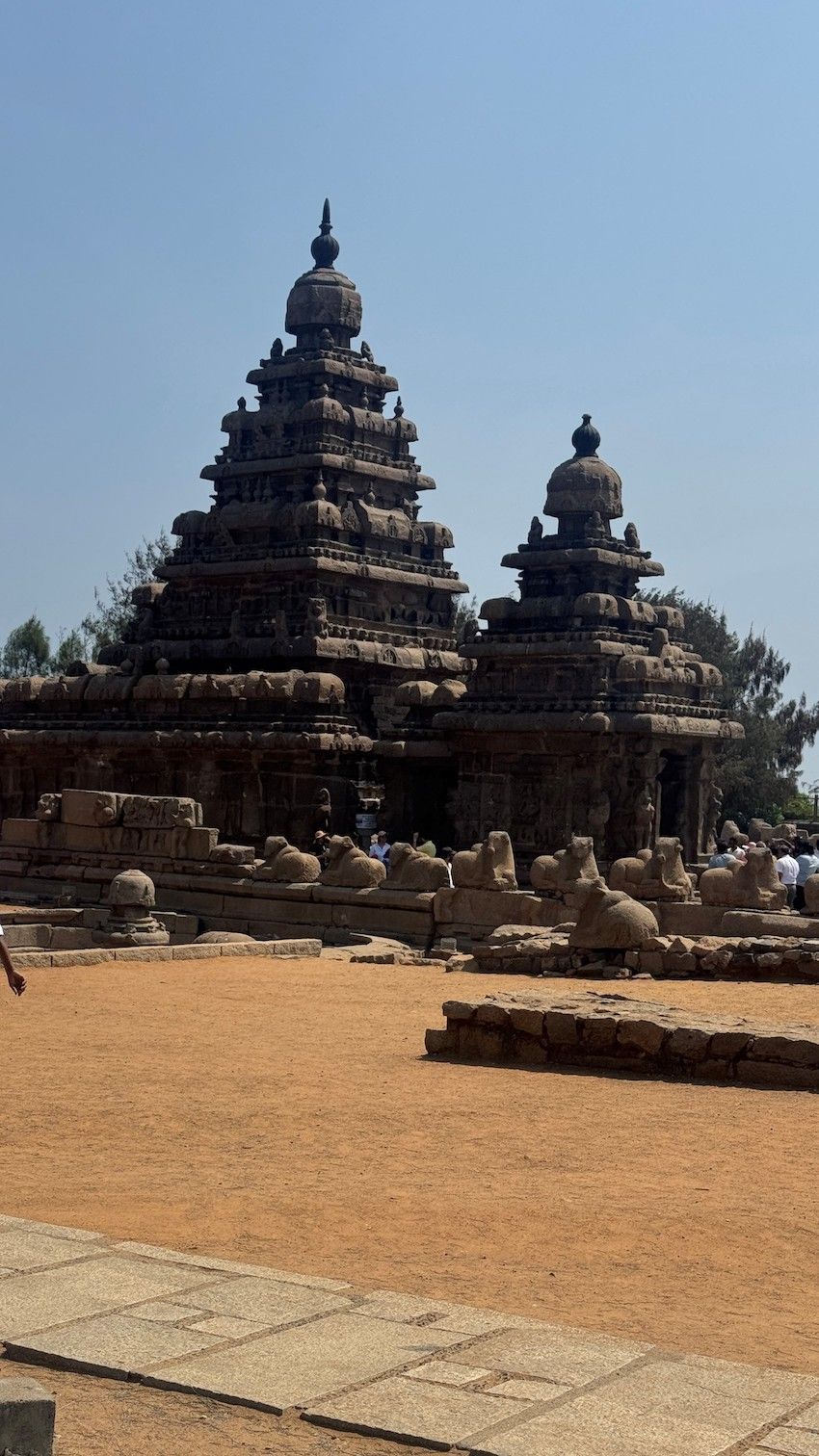
Crossing back toward the east coast and into Tamil Nadu, the landscape shifts and the air felt different, drier, more ancient. I travelled down to Mahabalipuram, where the shoreline feels elemental. Stone ‘sea shore’ temples rise directly from rock and sand, carved in the 7th and 8th centuries by the Pallava dynasty and designated a UNESCO World Heritage Site. Remarkable for both their age and their survival. The Shore Temple stood through the 2004 Indian Ocean tsunami, which, in receding, briefly revealed further ancient structures submerged for centuries beneath the waves. At sunrise, the sea breaks against them in a rhythm older than language itself, steady, unchanging, elemental.
Further south, Puducherry shifts the mood entirely. Pale colonial streets, shuttered windows, bougainvillaea spilling over walls. Once a French colonial territory until 1954, Puducherry retains its Franco-Tamil character in everything from street names to cuisine to the quiet confidence of its afternoon pace. There is a duality here that feels not conflicted but composed: Indian and French, spiritual and colonial, structured yet soft. Life moves without urgency, as if the town itself resists it. Even silence here feels deliberate.
Solo travel is often described as freedom. In reality, it is attention. Without distraction, everything sharpens, sound, detail, instinct. Navigation becomes intuitive. Uncertainty becomes manageable. And slowly, confidence replaces hesitation, not as transformation, but as accumulation.
South India does not ask to be rushed. It resists urgency. It asks instead to be noticed in salt air, in still water, in spice-heavy wind, in mist moving through hills, in streets layered with history and everyday life unfolding without performance.
And somewhere within that slowing, something shifts.
Travel is not measured in miles. It is measured in moments. And those moments, small, unplanned and often unnoticed at the time are what remain.
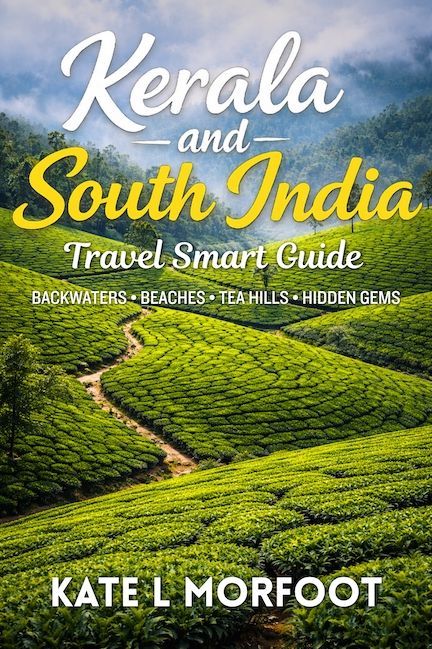
Kate Morfoot has launched Kerala and South India Travel Smart Guide.
Available online from Amazon as a paperback £9.99 and E Book £4.99.
Link: https://amzn.to/4w6vYOx